Drops — Warehouse Operations App
The internal app that runs Drops' warehouse — pickers, quality checkers, dispatchers, and drivers — built end-to-end as a solo engineer.
See the impact ↓In the box
The problem
Drops' fulfillment ran on manual, paper-based processes — slow, error-prone, and opaque. The company needed to digitize the full workflow from picking to delivery handoff, and I built the app end-to-end, solo: one Flutter codebase, four role-based experiences. The screens below are the design wireframes the app was built from.
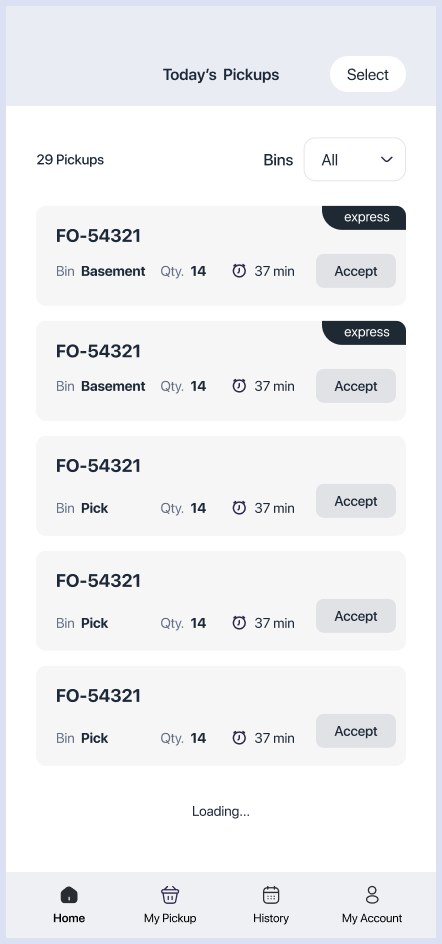
The picker's queue — today's pickups with bins and quantities.
Pick, scan, hand off
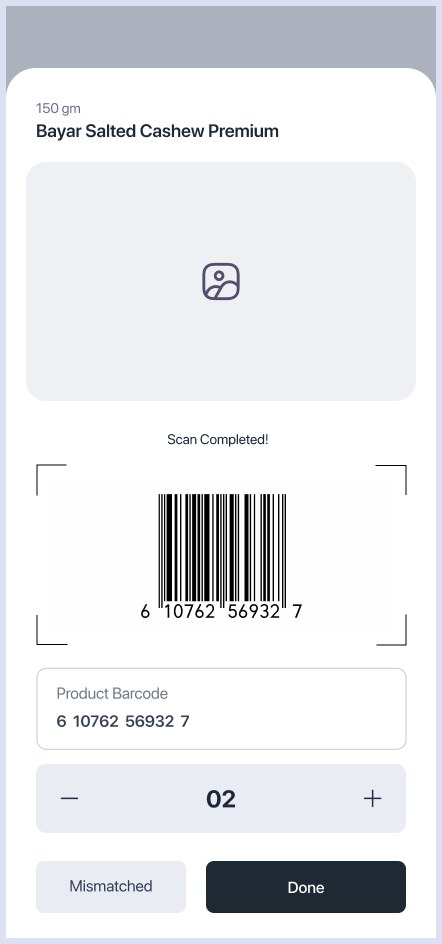
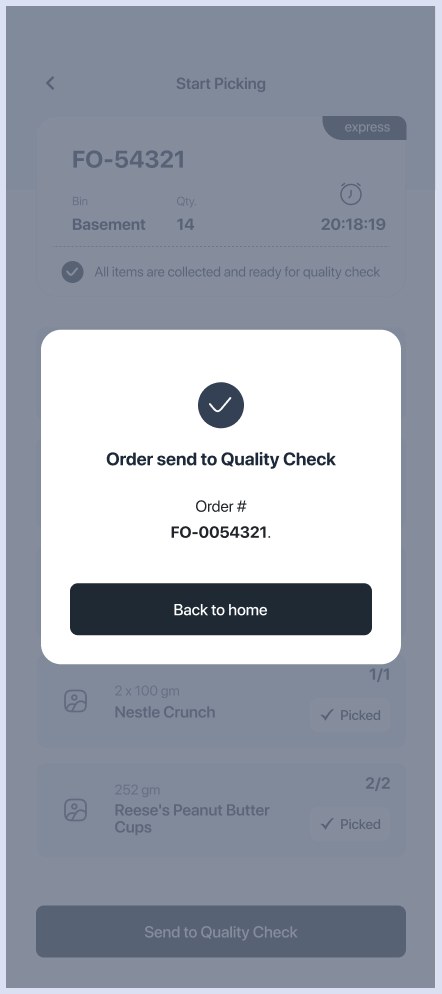
Pickers work a queue of today's pickups, accept orders, and pick item by item with barcode scanning — quantities verified against the order, mismatches flagged on the spot — then hand the completed order to quality check with one tap.
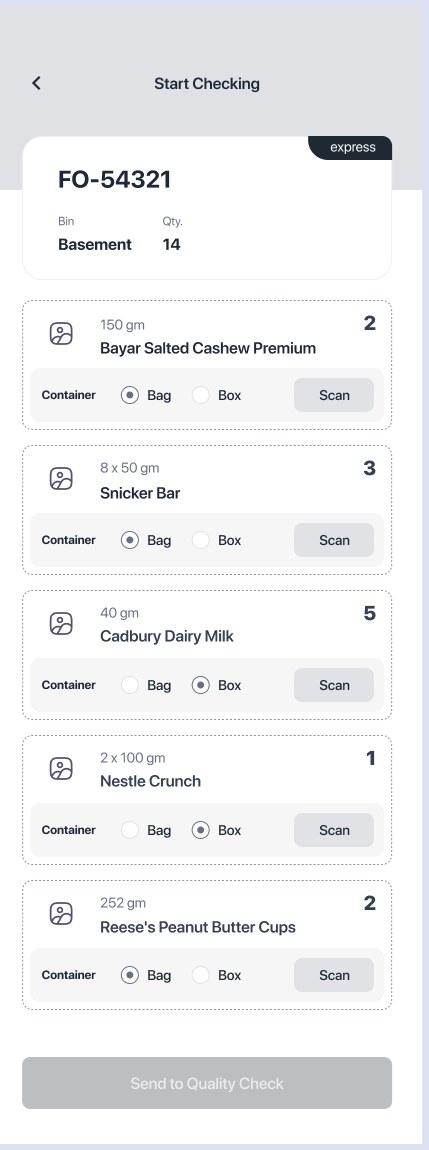
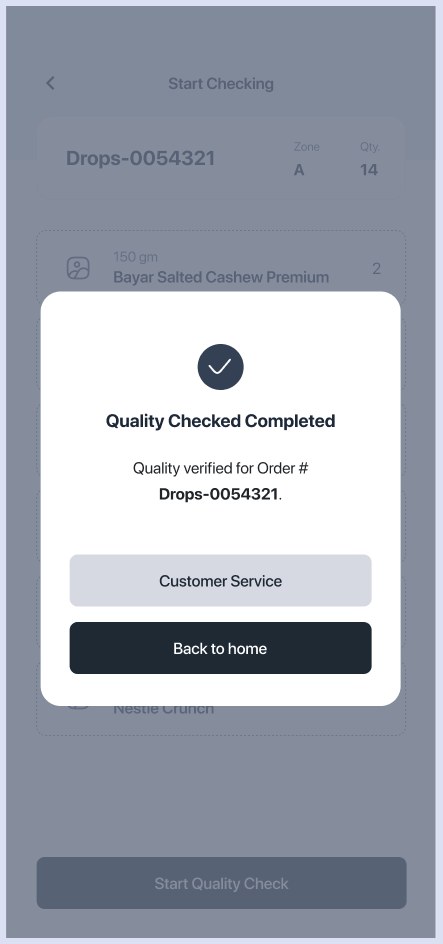
Item-by-item verification with per-container scanning.
Quality check
Checkers re-verify every item — scan again, confirm counts per bag and box, flag missing or damaged products with reasons — before the order is cleared for dispatch.
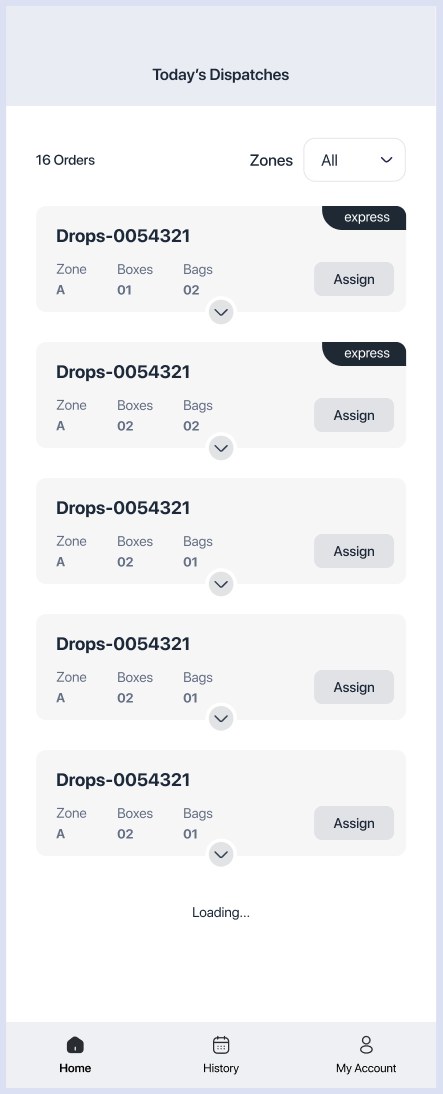
Today's dispatches by zone, ready to assign.
Dispatch
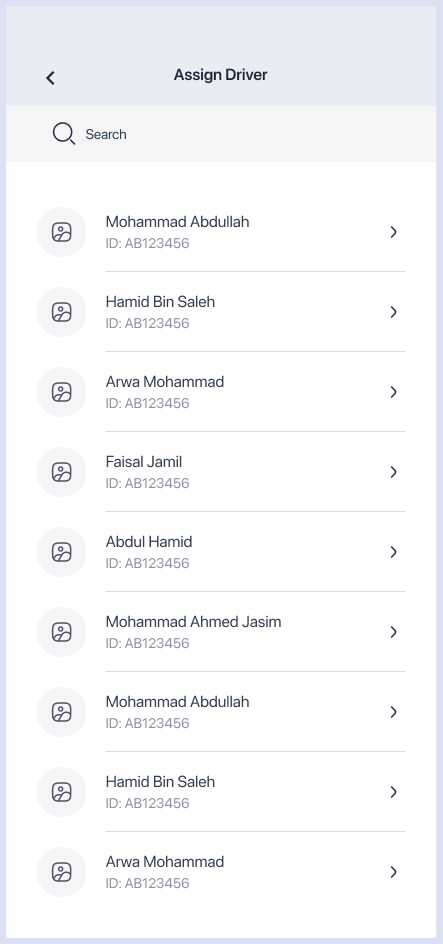
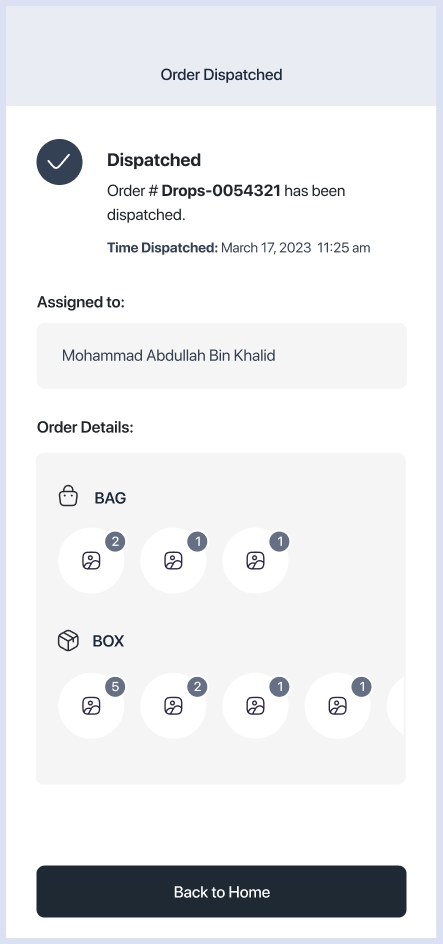
Dispatchers see the day's orders by zone with bag and box counts, assign drivers from the roster, and confirm each dispatch — keeping the handoff between warehouse and road accountable.
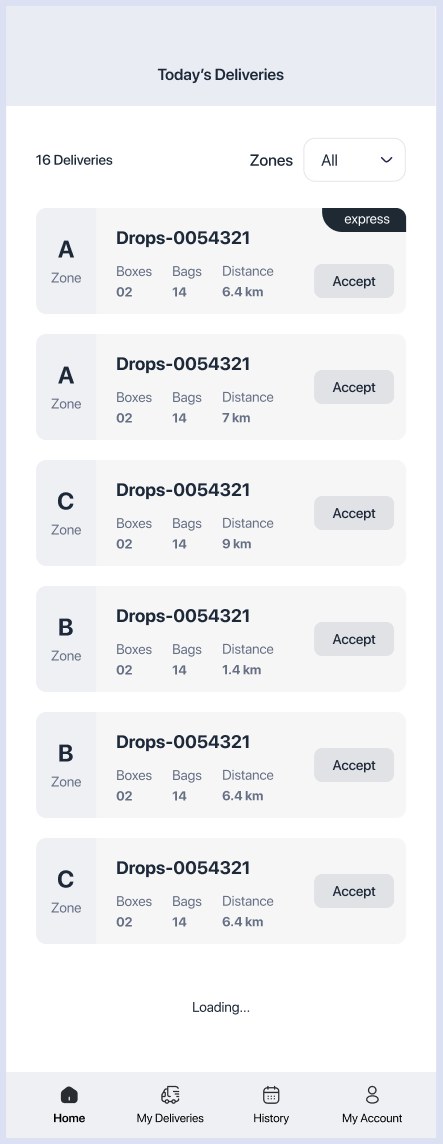
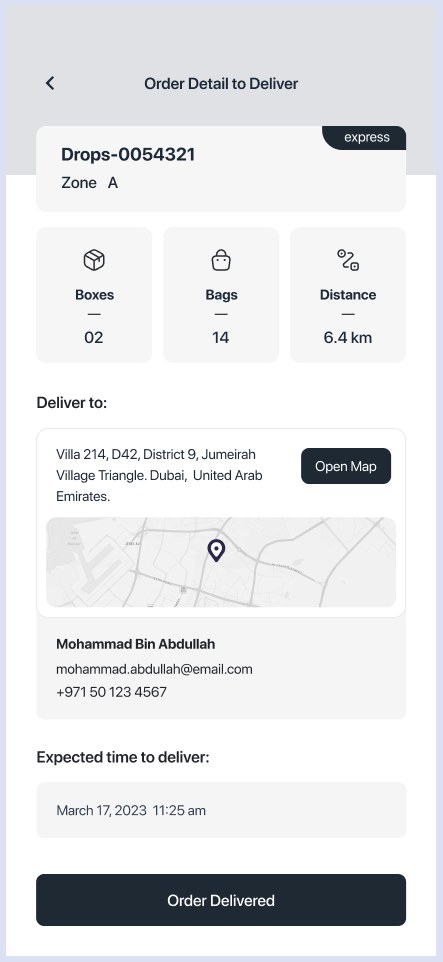
The driver's queue — deliveries by zone and distance.
Deliver
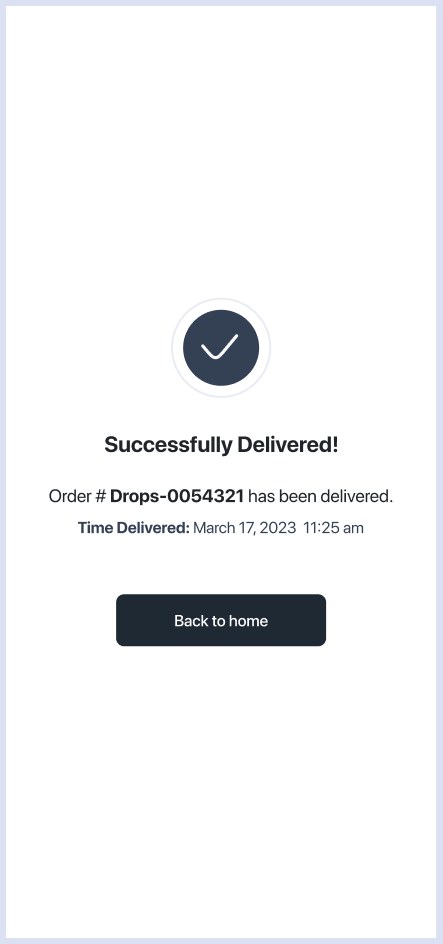
Drivers accept deliveries by zone and distance, get the address, map, and customer contact for each order, and close the loop with delivery confirmation — every order accounted for from shelf to doorstep.
Impact
- Paper-based warehouse operations replaced with a single system of record.
- Faster dispatch and fewer errors across all four fulfillment roles.
- Real-time order visibility for managers, from picking to handoff.
- A production-critical system scoped, architected, and shipped solo.